Cargo & Freight · Driver Training VideoHigh-Value Load Protocols
Cargo theft costs the industry hundreds of millions of dollars a year, and most of it happens within hours of pickup. Drivers learn seal checks, which lots to use, keeping load details quiet, and locking dropped trailers.
 Branded with your logo & company name
What drivers learn
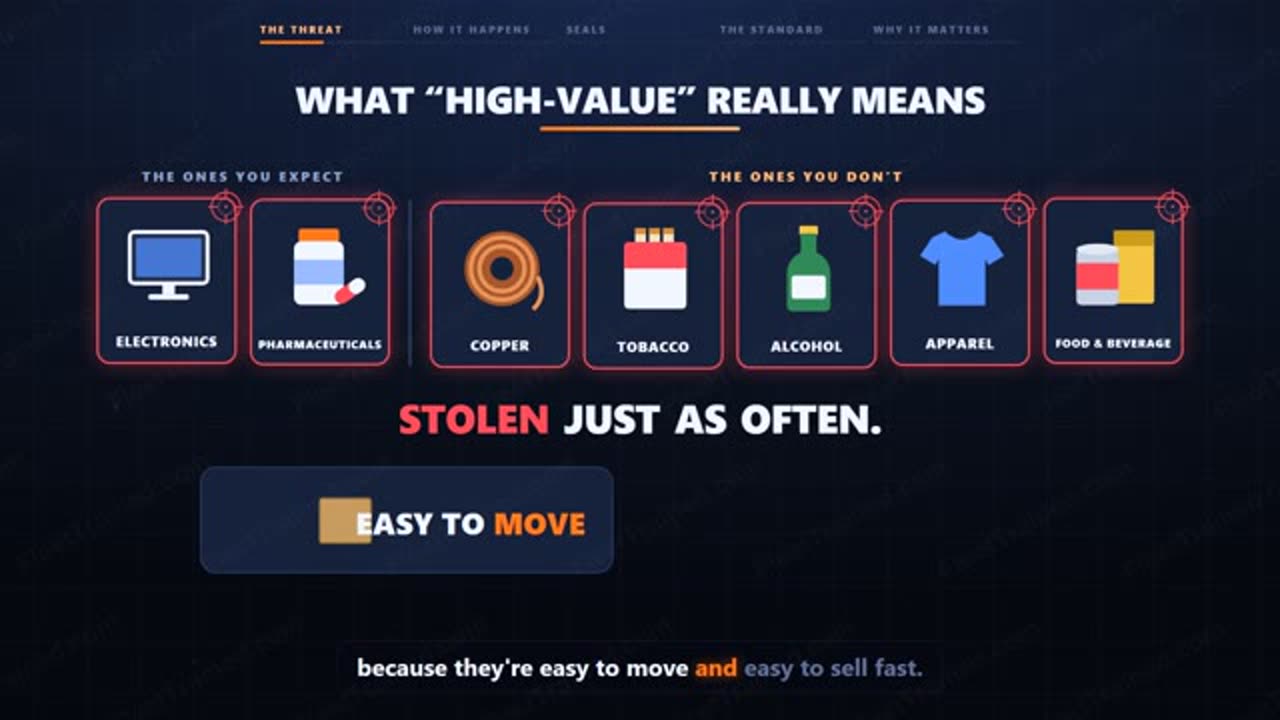
High-value doesn't just mean electronics or pharmaceuticals. Copper, tobacco, alcohol, apparel, and food and beverage loads get stolen just as often, because they're easy to move and easy to sell fast.
Here's how it usually goes
Someone follows a truck out of the shipper's lot, waits for the first stop, and either steals the whole tractor-trailer or cuts a seal and pulls product off the back.
That's why the protocols exist
Seals matter. The number on your seal has to match the number on your bill of lading before you leave the shipper, and you check it again at every stop after that. If a seal looks cut, re-taped, or doesn't match your paperwork, you don't touch it.
Your company standard: verify the seal number against your paperwork before you leave the shipper, and again after every stop. Don't make your first stop right outside the shipper's gate — put real distance behind you before you take a break.
None of this is about not trusting you. It's about making sure whoever's looking for an easy target doesn't find one on your truck. A driver who checks the seal, picks the right lot, and keeps quiet about the load is the reason these loads reach the dock exactly the way they left.
Sample quiz questions
3 of the 10 questions drivers answer after the video. Quizzes run in the driver's own language.
- Empty pallets
- Copper, tobacco, alcohol, apparel, and food/beverage loads
- Only refrigerated medical supplies
- Only loads over 40,000 lbs
Show answer
Copper, tobacco, alcohol, apparel, and food/beverage loads
- Weeks after delivery
- Fast, often within the first few hours after pickup while the trailer is still close to the shipper
- Only during holiday weekends
- Only when the trailer sits in a yard overnight
Show answer
Fast, often within the first few hours after pickup while the trailer is still close to the shipper
- Hacking the ELD remotely
- Following the truck out of the shipper's lot and waiting for the first stop
- Intercepting the load at a weigh station
- Calling the shipper directly
Show answer
Following the truck out of the shipper's lot and waiting for the first stop
How fleets use this training
Pick High-Value Load Protocols and send each driver a personal link by email, or copy the link and text it yourself.
Drivers watch on their phone and answer the quiz in their own language. No app, no login.
They sign on screen and get a certificate with your logo. Every completion is saved for DOT and insurance.
Train your drivers on High-Value Load Protocols
Included in the Full Library plan ($129.99/mo, unlimited drivers). Unlimited drivers, cancel anytime. Prefer to own it? Order it branded for $4.99, one time.
Frequently asked questions
How long is the High-Value Load Protocols training video?
About 3 min. Drivers watch it on their phone from a personal link, then take a 10-question quiz.
Is there a quiz and a completion certificate?
Yes. Every driver takes a 10-question quiz in their own language, signs on screen, and gets a completion certificate with your company name and logo. Records are saved for DOT audits and insurance.
Which languages is it available in?
Ready today in English. You can also order it branded in any other language for $2.99 per extra language.
How much does it cost?
Included in the Full Library plan ($129.99/mo, unlimited drivers). You can also order this video branded with your logo and company name in the voiceover for a one-time $4.99, yours to keep.